
Stiff Neck and Headaches? Here’s What Your Body Is Telling You
April 26, 2026
Lower Back Pain When Sitting or Standing? Causes & Solutions
April 26, 2026
Why Your Shoulder Pain Isn’t Going Away (And What You Can Do About It)
Shoulder pain that sticks around for more than a few weeks is trying to tell you something. Rest and ice might take the edge off for a while, but if the pain keeps coming back or never fully fades, it points to a structural issue that will not fix itself, and that is where the finest chiropractor service makes a real difference.
At our clinic, we regularly see patients who have been putting up with the same shoulder discomfort for months because the real cause was never pinned down. A thorough evaluation changes that.
Call us at (321) 234-0124 or book your first visit for $39.
The Shoulder Is Rarely the Whole Story
This is the part most patients do not expect to hear. The shoulder joint itself can be the primary source of pain, but the cervical spine and the thoracic spine both directly influence how the shoulder functions and how it feels.
When the nerves exiting the cervical spine are compressed or irritated by a herniated disc or vertebral misalignment, pain can radiate down into the shoulder, upper arm, and hand. Patients often describe this as a deep ache or burning sensation that does not change much with shoulder movement, because the source is higher up in the spine.
When the thoracic spine loses normal mobility from prolonged sitting or postural strain, the shoulder compensates by taking on more movement than it was designed for. That excess demand creates chronic stress on the rotator cuff, the tendons, and the surrounding soft tissue.
Treating the shoulder in isolation, without evaluating what the spine is contributing, is one of the primary reasons shoulder pain keeps returning.
What Is Causing the Pain
The most common structural causes we identify during shoulder evaluations:
Rotator Cuff Strain and Scar Tissue
The rotator cuff is a group of four muscles and their tendons that stabilize the shoulder joint and control its movement. Repetitive overhead activity, sudden trauma, or gradual wear can strain or partially tear these structures. During the repair process, the body deposits scar tissue. When that scar tissue forms in excess or in the wrong locations, it restricts how the tendons glide through the joint, creating a catching sensation and chronic pain that does not resolve with rest.
Cervical Nerve Compression
A herniated or bulging disc in the cervical spine can press directly on nerve roots that travel into the shoulder and arm. This type of shoulder pain does not improve with shoulder-specific treatment because the origin is spinal, not local.
Soft Tissue Adhesions
After any injury, inflammation, or extended period of restricted movement, the fascia and connective tissue surrounding the shoulder can develop adhesions. These restrict how structures move against each other and cause the joint to catch, pull, or ache during use.
Muscle Imbalance
Years of desk work, one-sided training, or favoring one arm after an injury create imbalances between the muscles that stabilize the shoulder. When some muscles become chronically tight and others chronically weak, the joint mechanics shift, and chronic strain on the more vulnerable structures follows.
How We Treat Persistent Shoulder Pain
Every treatment plan we build starts from the evaluation findings. Dr. Michael Bowerman and Dr. Carlos Gomez, both Doctors of Chiropractic trained at Palmer College of Chiropractic (the founding institution of the profession, established in 1897), evaluate the cervical spine, thoracic spine, and shoulder together before recommending any therapy.
Depending on what the evaluation reveals, care may include:
Chiropractic Adjustments
When the cervical or thoracic spine is contributing to shoulder symptoms through nerve compression or restricted joint movement, spinal adjustments restore proper mechanics and reduce pressure on the nerve roots feeding into the arm and shoulder. Correcting spinal alignment is often what allows the shoulder to begin healing properly.
Graston Soft Tissue Therapy
Graston is an instrument-assisted soft tissue mobilization (IASTM) technique that uses specially designed stainless steel tools to locate and break down scar tissue and fascial restrictions in and around the shoulder joint. Dr. Gomez is trained in Graston and uses it specifically for chronic soft tissue conditions and post-injury cases where manual work alone is insufficient.
Cupping Therapy
Suction cups applied to the upper back, shoulder, and cervical region increase blood flow to restricted tissue, release deep muscle tension, and support the removal of inflammatory waste that has accumulated in chronically tight areas. We frequently combine cupping with Graston for a more complete soft tissue release.
Class IV Laser Therapy
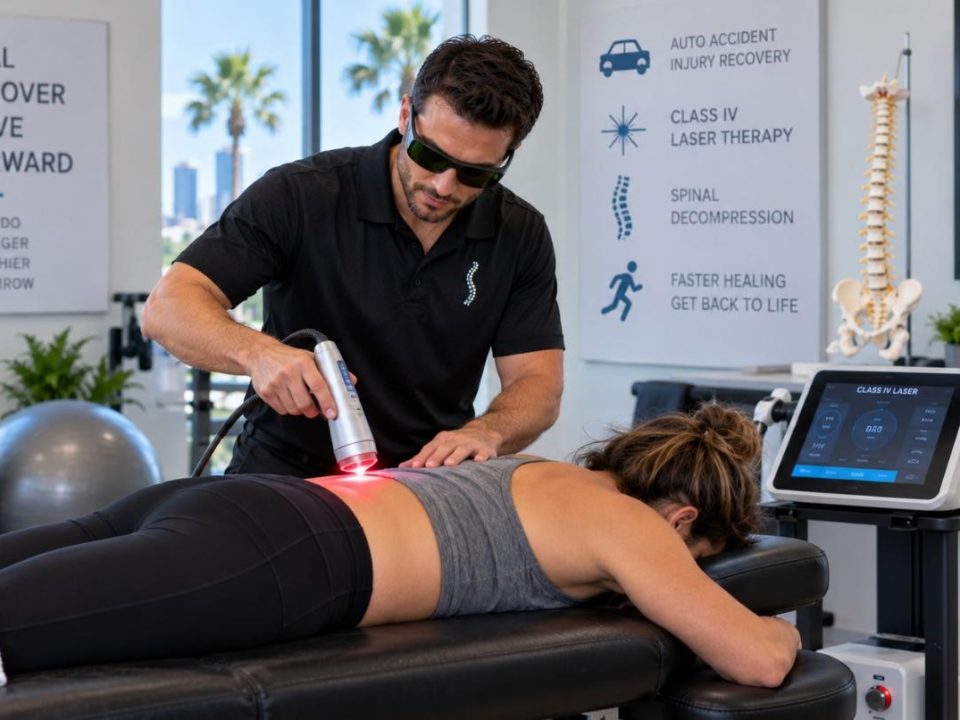
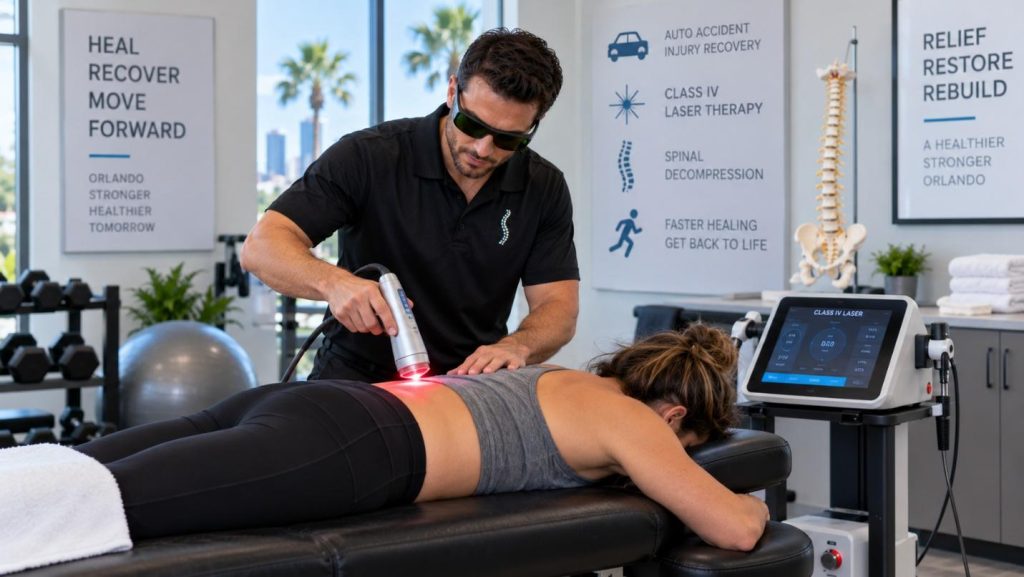
Available through our affiliated Meadow Woods Laser Pain Center, Class IV laser therapy uses high-powered light energy to penetrate deep into damaged shoulder tissue, reduce inflammation, and stimulate cellular repair. It is a gentle and painless treatment that is particularly effective for tissue that has plateaued with manual therapy alone.
Exercise Rehabilitation
Once the structural and soft tissue causes are addressed, we build a personalized rehabilitation program to restore the strength and stability the shoulder needs to stay healthy. Rehab work is coordinated with in-clinic treatment so that progress carries forward between sessions.
Electrical Muscle Stimulation
When significant muscle spasm or acute pain is limiting treatment progress, low-level electrical impulses relax the surrounding musculature and reduce pain so that deeper structural work can proceed.
What to Expect at Your First Appointment
Your first visit includes a full evaluation with one of our doctors, a review of your symptoms and history, and a clear walkthrough of the recommended treatment plan. We explain what each therapy addresses and why it applies to your specific condition before anything begins. In most cases, treatment starts at the first visit.No referral is required. Patient intake forms are available online if you want to complete them before arriving.
Related topics: