
Waking Up with Back Pain? Here’s What It Could Mean (And How to Fix It)
April 26, 2026
Stiff Neck and Headaches? Here’s What Your Body Is Telling You
April 26, 2026
Joint Pain Slowing You Down? Here Are Non-Surgical Treatment Options
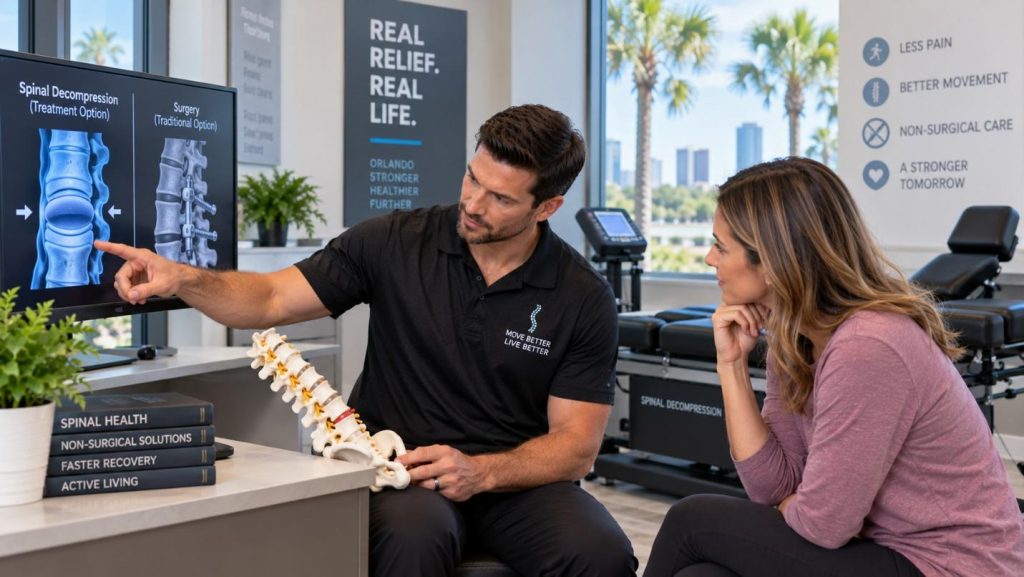
Joint pain that messes with your sleep, slows you down during the day, or keeps you from doing the things you actually enjoy isn’t something you should have to just live with. You deserve more than a prescription for anti-inflammatories and a quick referral to a surgeon. As a recommended chiropractor in Orlando, FL, we’ve worked with plenty of patients who came in convinced surgery was their only option, and most of them found real relief without it. Non-surgical care often works just as well, and in a lot of cases, the long-term outcomes are actually better.
It all comes down to figuring out what is actually causing the pain. A solid diagnosis matters, and so does a treatment plan built around the real source rather than something that just masks the symptoms for a while. At our clinic, we see patients dealing with pain in the spine, shoulders, hips, and other joints who want a real path forward without going under the knife.
Call us at (321) 234-0124 or book your first visit for $39.
What Is Usually Behind Persistent Joint Pain
Before any treatment decision makes sense, the source of the joint pain needs to be identified. The same symptom can come from very different structural causes, and treating the wrong one produces no lasting result. These are the most common contributors we find during evaluation.
Inflammation
Chronic inflammation in and around a joint leads to swelling, stiffness, and pain that limits range of motion. Inflammation can develop from an acute injury, repetitive strain, or as a response to mechanical dysfunction in the joint. Reducing inflammation is often the first priority before any structural work can be effective.
Scar Tissue and Fascial Restrictions
After injury or prolonged inflammation, the body deposits scar tissue as part of the repair process. When scar tissue develops in excessive amounts or in locations that restrict how structures slide past each other, the joint loses its normal range of motion, creates a catching or grinding sensation, and becomes a source of ongoing pain.
Spinal Nerve Compression
Joint pain in the shoulder, arm, hip, or leg does not always originate at the joint itself. The spinal nerve roots that supply sensation and motor control to these areas exit the cervical and lumbar spine. A herniated disc or vertebral misalignment pressing on one of those nerve roots produces pain that registers as coming from the joint or limb, not the spine. Treating the joint without addressing a spinal source produces no lasting result.
Muscle Imbalance
When the muscles surrounding a joint are out of balance, with some chronically tight and others chronically weak, the loading mechanics of the joint change. Over time, the structures carrying that shifted load break down and become painful. Muscle imbalance is one of the most common reasons joint pain returns after treatment that does not include rehabilitation.
Joint Degeneration
Natural wear of the cartilage and bone surfaces, combined with disc height loss that narrows the spaces nerve roots require, creates joint degeneration over time. This is not an endpoint. Many patients with significant degeneration on imaging respond well to conservative care that reduces the mechanical stress driving the breakdown.
Non-Surgical Treatment Options We Offer
Our team approaches joint pain with a toolkit that addresses the full range of causes: structural, soft tissue, inflammatory, and neurological.
Chiropractic Adjustments
When spinal nerve compression is contributing to perceived joint pain, or when the joint itself has lost normal movement from subluxation or restriction, a precise adjustment restores proper mechanics and reduces the nerve irritation at the source. Dr. Michael Bowerman and Dr. Carlos Gomez, both trained at Palmer College of Chiropractic (established in 1897), perform manual and instrument-assisted adjustments calibrated to each patient’s specific evaluation findings.
Graston Soft Tissue Therapy
Graston is an instrument-assisted soft tissue mobilization (IASTM) technique that uses stainless steel tools to locate and break down scar tissue and fascial restrictions around a joint. For patients with chronic joint pain from overuse, post-injury scar buildup, or tendon conditions, Graston removes the soft tissue obstacles that are keeping the joint from moving freely. Dr. Gomez is trained in Graston and performs it at our clinic.
Cupping Therapy
Suction cups applied to the tissue surrounding a painful joint increase local blood flow, draw inflammatory waste products away from the area, and release deep muscle tension that is maintaining abnormal joint loading. Cupping is frequently paired with Graston for a more thorough soft tissue release, particularly around the shoulder, upper back, and hip regions.
Class IV Laser Therapy
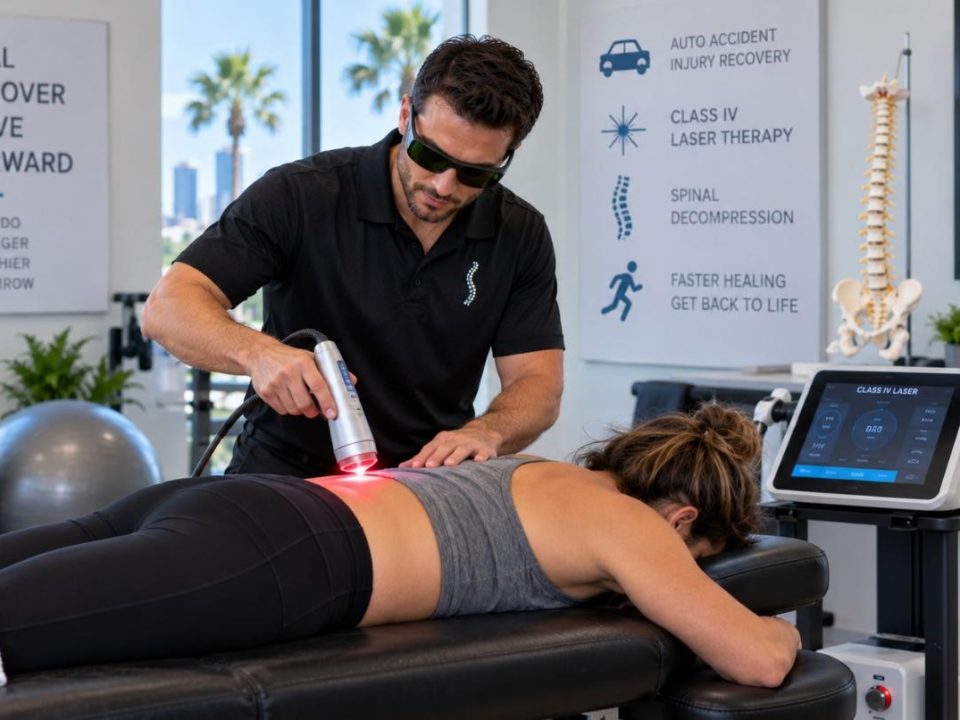
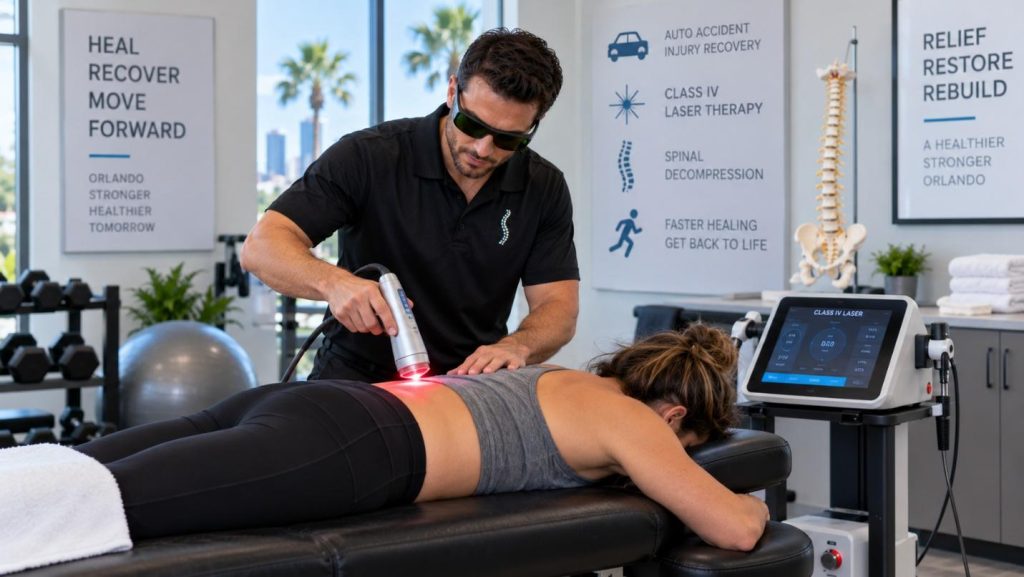
Available through our affiliated Meadow Woods Laser Pain Center, Class IV laser therapy delivers high-powered light energy deep into inflamed or damaged joint tissue. It reduces inflammation, stimulates the cellular repair process, and accelerates healing in a way that manual therapy alone cannot reach. The treatment is gentle, painless, and particularly effective for patients whose joint pain has a significant inflammatory component.
Exercise Rehabilitation
Rebuilding the muscular support around a painful joint is the most direct way to reduce the abnormal loading that accelerates degeneration and sustains pain. We build personalized rehabilitation programs targeting the specific imbalances and weaknesses identified in your evaluation. Rehab exercises are coordinated with in-clinic treatment so that each session builds on the last.
Electrical Muscle Stimulation
When significant muscle spasm or acute inflammation limits how far we can progress with structural treatment, EMS delivers low-level electrical impulses that relax the surrounding musculature and reduce pain. We frequently use this as a first step to prepare the joint area for deeper work.
How We Build a Treatment Plan for Joint Pain
Every treatment plan we build starts with a full evaluation. We do not apply a standard protocol to every joint pain patient because the source of the pain varies. A shoulder that hurts because of cervical nerve compression requires different treatment than a shoulder that hurts because of rotator cuff scar tissue, even though the symptom is the same.
The evaluation covers the involved joint, the surrounding soft tissue, the relevant spinal levels, and the neurological picture. Once the source is identified, we combine the therapies that address it directly, explain the reasoning before anything begins, and set a realistic timeline for outcomes.
Dr. Bowerman holds membership in the American Chiropractic Association and the Orlando Regional Chamber of Commerce. Dr. Gomez is a member of the Florida Chiropractic Association and the Florida Chiropractic Society.
Related topics: