
Non-Surgical Treatments for Chronic Pain in Orlando, FL
June 1, 2026
Is Chiropractic Care Effective for Lower Back Pain? A Local Guide
June 1, 2026
When Should You See a Chiropractor for Joint Pain
Joint pain can range from morning stiffness that fades once you start moving to a persistent ache that limits what you can do through the day. Knowing when to see an experienced chiropractor, rather than waiting to see if the pain resolves on its own, can make the difference between a short recovery and a longer, more involved one. At Orlando Spine and Wellness Center, we help patients across Orlando, Kissimmee, and Central Florida understand what their joint pain is telling them and offer personalized chiropractic joint care that addresses the root cause without surgery or medication.
What Joint Pain Can Signal
Joint pain in the spine and surrounding areas is often a sign that something is not moving correctly. A joint that is restricted, inflamed, or carrying abnormal load produces pain as a signal that the mechanics are off. Left unaddressed, that pattern typically worsens over time. Surrounding muscles tighten to compensate, other joints absorb extra stress, and the original restriction deepens.
Joint pain in the spine commonly points to vertebral joint dysfunction, disc pressure, or sacroiliac joint dysfunction. Pain in the hips, shoulders, and knees can also have spinal or postural contributors that are not immediately obvious from where the pain is felt. Our doctors evaluate the full picture before recommending a treatment path.
Signs That It Is Time to Come In
You do not need to be in severe pain before an evaluation makes sense. The following situations are clear indicators that it is time to schedule a visit.
Pain that has lasted more than two weeks without improving is one of the clearer signals. Short-term soreness from overuse or minor strain often resolves on its own. Pain that persists, or that keeps returning in the same location, points to a structural issue that needs to be identified and addressed directly.
Pain that limits your normal movement is another indicator. Not being able to turn your head fully, struggling to bend forward without stiffness, or favoring one side when you walk all signal that joint function has been compromised in a way that will not self-correct.
Pain accompanied by tingling, numbness, or weakness in an arm or leg suggests that a nerve is being compressed, often by a misaligned vertebra or a disc under pressure. This warrants prompt evaluation rather than a wait-and-see approach.
Pain that developed after a car accident, a fall, or a sports injury should be assessed as early as possible. Soft tissue and joint injuries do not always produce immediate symptoms. Delayed onset pain after trauma is common, and early evaluation documents the injury before symptoms worsen.
What We Do for Joint Pain
After a thorough evaluation, our doctors, Dr. Michael Bowerman, D.C. and Dr. Carlos Gomez, D.C., both Palmer College of Chiropractic graduates, build a treatment plan based on the specific joint or joints involved and what is driving the problem.
Chiropractic adjustments address joint restriction directly by restoring proper motion to the affected vertebra or joint. When a joint is not moving through its full range, the adjustment corrects that restriction and reduces the pain and nerve irritation that comes with it.
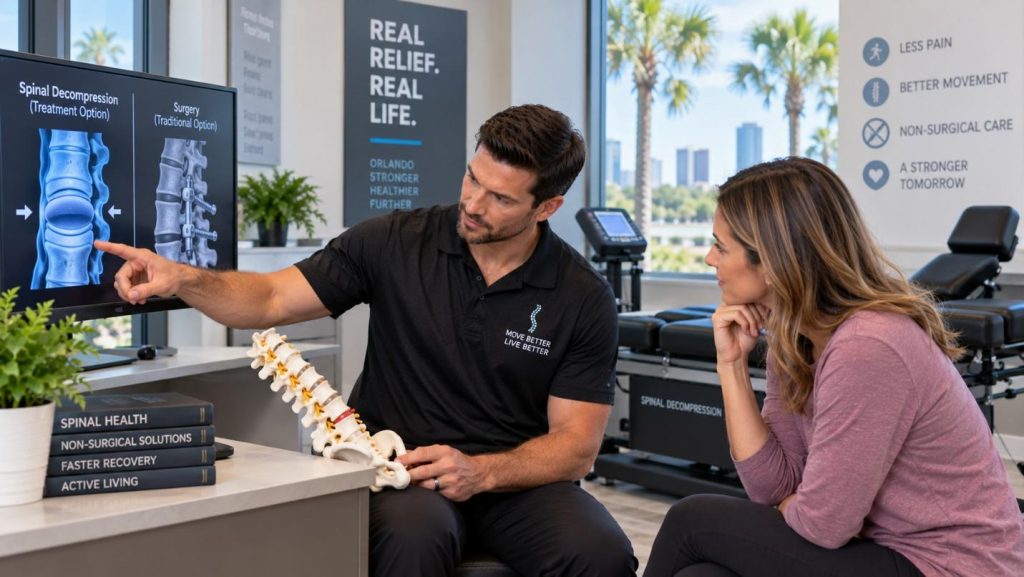
Spinal decompression therapy is used when disc pressure is contributing to joint pain, particularly in the lumbar or cervical spine. The treatment reduces that pressure through a computer-controlled traction cycle, allowing compressed structures to recover.
Graston soft tissue therapy and cupping therapy address the soft tissue surrounding affected joints. Scar tissue, fascial restrictions, and inflamed tissue around a joint all contribute to pain and limited movement. These techniques work directly on those tissues.
Exercise rehabilitation builds the muscular support that a recovering joint needs to stay stable and move correctly after treatment ends. Our doctors prescribe specific corrective exercises matched to your diagnosis and current capacity.
When Joint Pain Has Gone On Too Long
Recurring joint pain, meaning pain that comes back regularly in the same location after brief periods of improvement, usually points to an underlying structural issue that has not been fully resolved. A thorough evaluation identifies that issue. Treatment then addresses it at the source rather than managing symptoms temporarily and waiting for them to return.
Related topics: