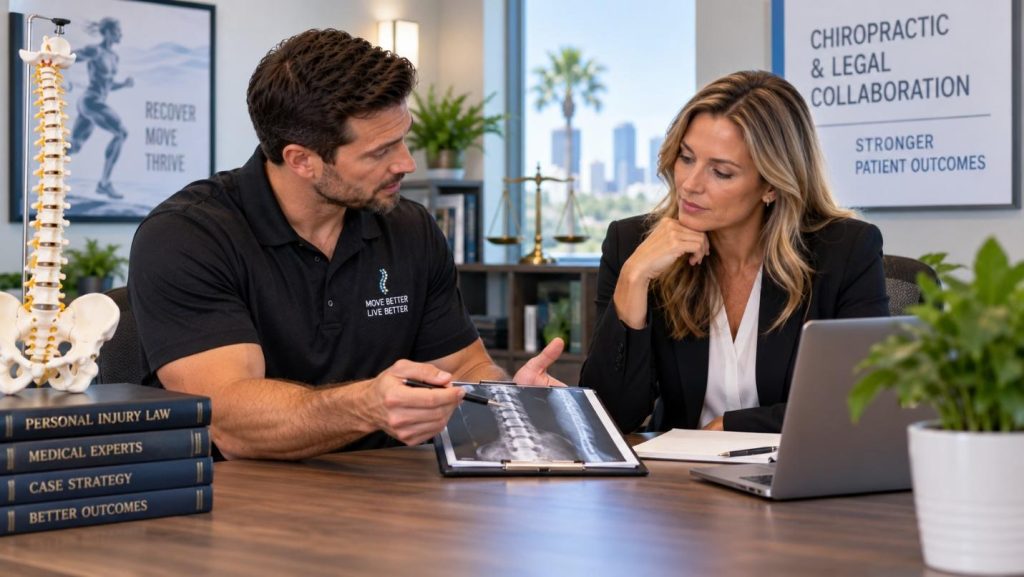
What Personal Injury Attorneys in Orlando Should Look for in a Chiropractic Referral Partner
September 17, 2026
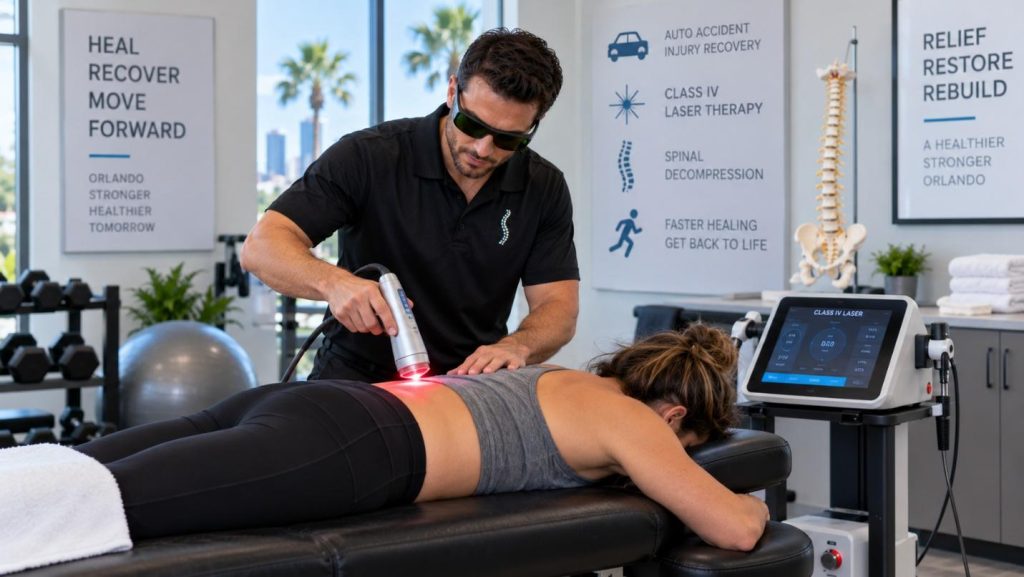
Class IV Laser Therapy for Auto Accident Injuries: How It Speeds Recovery Alongside Spinal Decompression
September 17, 2026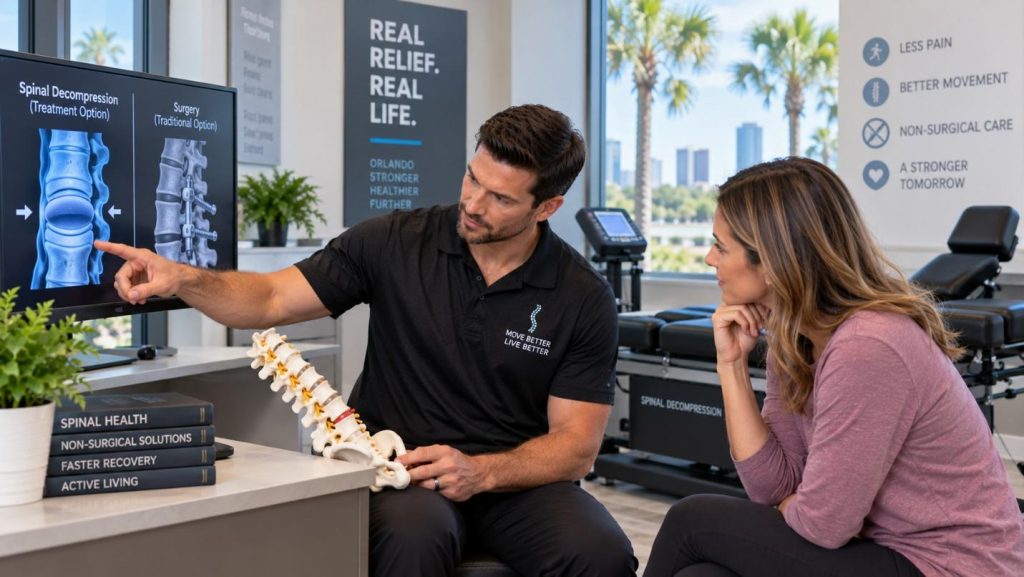
Spinal Decompression vs. Surgery After a Car Accident: A Non-Surgical Path for Orlando Patients
Many disc injuries from a car accident do not require surgery as a first step. Orlando Spine and Wellness Center offers non-surgical spinal decompression using a computer-controlled Triton DTS system, giving Orlando patients a conservative, evidence-based option to consider before surgery becomes part of the conversation.
What Is Non-Surgical Spinal Decompression?
Spinal decompression is a non-surgical treatment that gently stretches the spine using a computer-controlled table, in our case the Triton DTS system, to reduce pressure on spinal discs and the nerves surrounding them. This gentle, cyclical unloading creates negative pressure inside the disc, which can encourage bulging or herniated disc material to retract slightly while also promoting the exchange of nutrients and fluids that support natural healing.
At Orlando Spine and Wellness Center, spinal decompression is one of our primary specialty services, offered as a full, dedicated cash-based treatment program specifically for patients dealing with herniated or bulging discs, sciatica, and degenerative disc disease, including many injuries that stem directly from car accidents.
How Does a Car Accident Cause the Kind of Disc Injuries Spinal Decompression Treats?
The sudden force of a car accident, even at relatively low speeds, can compress and shift the discs that cushion the vertebrae in the neck and lower back. This can result in a disc bulging outward or, in more significant cases, herniating, where the inner disc material pushes through a tear in the outer layer and presses on a nearby nerve root.
These injuries commonly cause radiating pain, numbness, or weakness that travels from the neck into the arm, or from the low back into the hip and leg, a pattern often described as sciatica when it affects the lower body. Because these symptoms can worsen over the days following an accident, an early evaluation matters just as much for disc injuries as it does for satisfying Florida's PIP requirements.
Is Spinal Decompression a Realistic Alternative to Surgery?
For many patients, yes, though the right path always depends on the specific injury and its severity. Surgery is generally considered when conservative treatment has been tried without success, or when there are progressive neurological symptoms that require more urgent intervention. For a large number of disc injuries, however, conservative care is a reasonable and often effective starting point before surgery is on the table.
Clinical results show spinal decompression therapy is effective in 86% of patients treated, which is one of the reasons our doctors frequently recommend it as a first-line option for appropriately selected disc injuries, particularly those stemming from auto accidents where the injury is relatively recent and has not yet become chronic.
What Does a Spinal Decompression Program Involve?
- An initial evaluation to confirm spinal decompression is an appropriate fit for the specific injury
- A series of sessions on the Triton DTS system, each involving gentle, controlled traction cycles
- Sessions frequently combined with chiropractic adjustments for more complete, longer-lasting relief
- Ongoing reassessment throughout the program to track progress and adjust the plan as needed
How Does Spinal Decompression Compare to Surgical Recovery?
Spinal decompression is non-invasive, requires no incision, and involves no anesthesia or hospital stay, which means there is no surgical recovery period to plan around. Patients typically resume normal daily activities immediately after each session. Surgery, by contrast, carries the inherent risks of any invasive procedure, along with a recovery period that can extend for weeks or months depending on the specific procedure performed.
This does not mean spinal decompression is right for every disc injury, some cases genuinely do require surgical intervention, but it does mean patients deserve the chance to try a well-supported conservative option first when their specific injury and symptoms make that appropriate.
Combining Spinal Decompression With Other Auto Accident Care
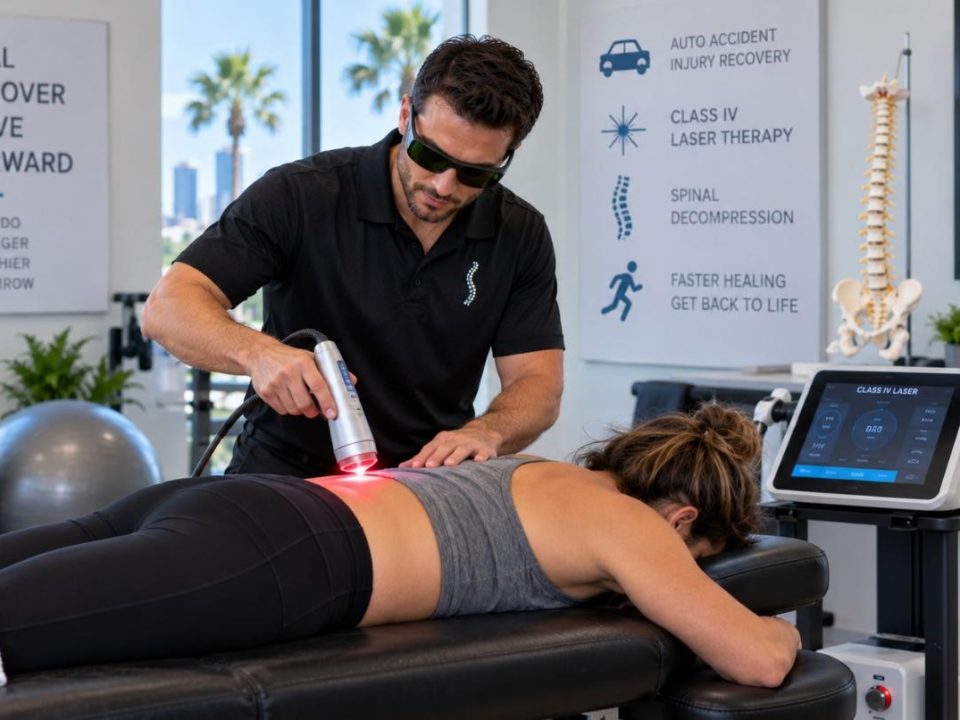
Auto accident and personal injury patients frequently combine spinal decompression with chiropractic adjustments, and sometimes Class IV regenerative laser therapy, for faster and longer-lasting relief. Each treatment plan is built around the individual patient's diagnosis, symptoms, and how their body responds to care, rather than a one-size-fits-all protocol.
What Does the Triton DTS System Actually Do?
The Triton DTS system is a computer-controlled traction table that applies precise, cyclical pulling and relaxing forces to the spine rather than constant, static tension. This cyclical pattern is important, since continuous traction can trigger the body's natural muscle-guarding reflex, while the gentle on-and-off pattern used by the Triton system is designed to work with the body rather than against it.
During each session, the system targets the specific spinal level involved in the injury, whether that is in the neck or lower back, based on the doctor's evaluation and any available imaging. Patients typically lie comfortably on the table fully clothed, and sessions are quiet, controlled, and require no sedation or recovery time afterward.
Who Is a Good Candidate for Spinal Decompression?
Good candidates typically include patients with a diagnosed herniated or bulging disc, sciatica caused by nerve root compression, or degenerative disc disease that has not responded fully to more conservative measures alone. Patients recovering from a car accident who show disc involvement on examination are frequently strong candidates as well, particularly when the injury is caught and treated early rather than left untreated for months.
Not every back or neck condition is a fit for spinal decompression, which is why every program begins with a thorough evaluation. Certain conditions, such as spinal fractures, advanced osteoporosis, or certain types of spinal instability, generally are not appropriate for this type of traction-based treatment, and our doctors screen carefully for these factors before starting anyone on the program.
What Does a Typical Course of Treatment Look Like?
Most spinal decompression programs involve a series of sessions scheduled over several weeks, with the exact frequency and total number of sessions depending on the severity of the disc injury and how the patient responds along the way. Many patients begin noticing reduced pain and improved mobility within the first several sessions, though full results typically build gradually over the full course of the program rather than appearing all at once.
Because this is a dedicated cash-based program, pricing is transparent and discussed upfront before treatment begins, so patients know exactly what the full program involves before committing to it.
What If Spinal Decompression Alone Is Not Enough?
For some patients, spinal decompression alone provides significant relief, while others benefit from combining it with additional care such as chiropractic adjustments, Class IV laser therapy, or targeted rehabilitative exercise. Our doctors monitor progress throughout the program and will discuss adjusting the plan if the expected improvement is not being seen, rather than continuing an unmodified plan indefinitely.
In the rare cases where conservative care, including spinal decompression, does not produce adequate improvement, doctors will have an honest conversation about next steps, which may include referral to an appropriate specialist for further evaluation and imaging. The goal is always an honest, ongoing assessment of what is actually working for each patient, not simply continuing treatment indefinitely for its own sake.
Questions Patients Often Ask About Spinal Decompression
Patients considering this program often want to know whether the treatment is painful, and the answer is that most patients find it comfortable, describing a gentle stretching sensation rather than any sharp pain. Others ask how soon they might feel relief, and while some patients notice improvement early on, meaningful, lasting results typically build over the full course of the program rather than appearing after a single session.
Patients also frequently ask whether spinal decompression can be combined with an existing auto accident claim, and the answer is yes, it is one of the more common treatments provided as part of a documented, well-tracked auto accident recovery plan at our Orlando office.
Spinal Decompression for Patients Across Central Florida
Patients travel to our Orlando office from Kissimmee, Winter Garden, Lake Nona, and Hunters Creek specifically for our spinal decompression program, since the Triton DTS system and the dedicated treatment protocol built around it are not available at every clinic in the area. For many patients, the drive is well worth it to access a conservative, well-documented option before considering surgery.
Talk to Our Doctors About Your Disc Injury
If you are dealing with a herniated or bulging disc, sciatica, or degenerative disc disease, whether from a car accident or another cause, contact Orlando Spine and Wellness Center to find out whether our non-surgical spinal decompression program is a good fit for your specific injury before considering more invasive options.